
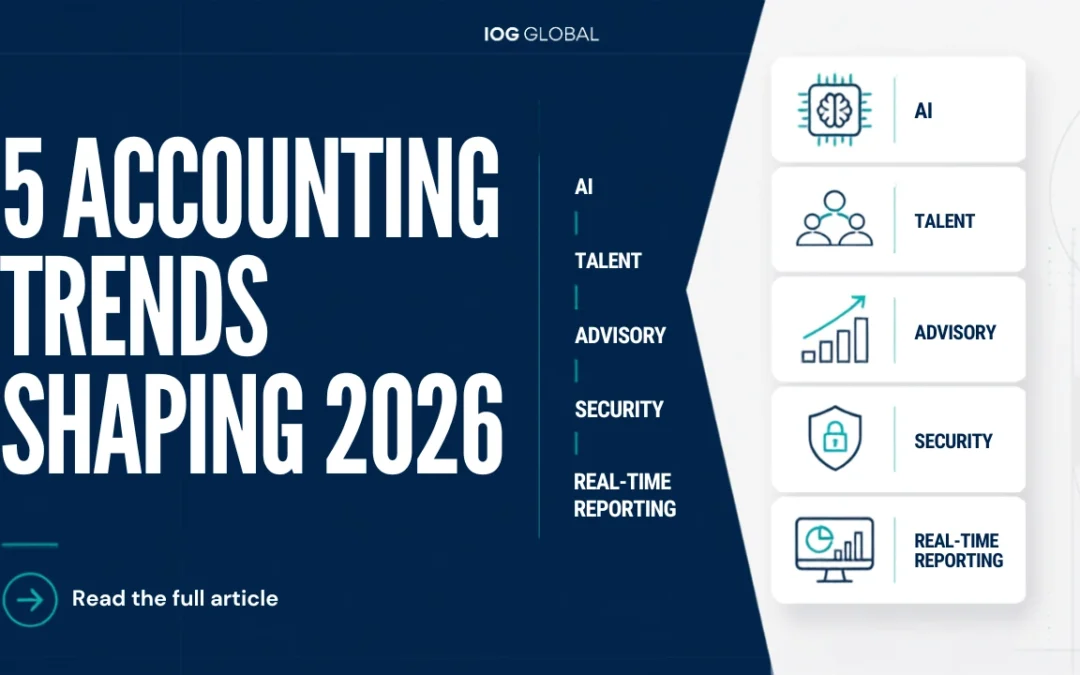
The accounting profession is moving at a pace unlike anything we’ve seen before. Between AI adoption accelerating, advisory services redefining margins, and talent shortages reaching critical levels, 2026 is the year firms either adapt or fall behind.
This isn’t theoretical it’s happening now. Here’s what’s actually shifting in the accounting world in 2026, and what it means for your practice.
1. AI Adoption Has Shifted From “Should We?” to “What’s Our Strategy?”
The question isn’t whether accounting firms will use AI anymore. The question is how quickly.
In 2025, firms were still experimenting. In 2026, CFOs and controllers are expected to own an AI strategy. The conversation has moved from curiosity to accountability and the gap between firms with a real strategy and those just dabbling is already widening.
Firms actively using AI are reporting significantly higher revenue per employee compared to those not using it. Around half of accountants (53%) already use AI tools in their daily workflows, primarily for chatbots, data entry, and fraud detection.
The catch: only 47% of CFOs believe their teams are equipped to use AI tools effectively. This skills gap is real, and it’s not closing on its own.
What this means for your firm: You need staff who can work alongside AI systems, not just staff doing manual work that AI will replace. Building this capability takes time which means starting now.
2. Talent Shortages Are Structural, Not Temporary
This is where the pressure is actually hitting hardest.
The public accounting pipeline is shrinking. Fewer graduates are sitting the CPA exam in several regions, retirement rates are climbing among experienced professionals, and private industry is aggressively pulling talent out of public practice. Demand keeps rising (advisory services, tech adoption, regulatory complexity), but supply isn’t keeping up.
Many practices are already broadening how they hire moving away from “one path” recruitment strategies toward flexible talent acquisition. But local hiring alone isn’t solving the problem.
What this means for your firm: Seasonal overload (especially EOFY) is becoming harder to staff with traditional hiring. Practices that can’t expand their roster quickly are either turning away capacity or burning out existing staff trying to cover the gap.
3. Advisory Services and Value Based Pricing Are Becoming the Margin Driver
Median Client Advisory Services (CAS) net client fees per professional hit $156,250 in 2024 a 29% increase from 2022. Participating CAS practices reported 17% median growth, with projections of 99% median growth over the next three years.
The trend is clear: advisory work is higher margin, stickier with clients, and easier to package into recurring fees than transactional bookkeeping or tax compliance.
But here’s the blocker: advisory requires senior level thinking and client relationship time. It’s hard to build that capability when you’re drowning in manual data entry and reconciliations.
What this means for your firm: Firms making the shift to advisory led models are having to automate or delegate the transactional work to free up senior staff. Without doing that first, the advisory strategy stalls.
4. Cybersecurity Is Now a Competitive Advantage (and a Risk)
Cybersecurity threats are intensifying, and compliance accountability is tightening. Firms that proactively invest in security infrastructure aren’t just protecting themselves they’re building a sales differentiator.
Clients are now factoring data security into their choice of accounting partner. If your security posture is weak, you’re losing deals. If it’s demonstrably strong, you’re winning them.
What this means for your firm: This is a trust and retention issue. Practices with certified information security standards (like ISO/IEC 27001) have a concrete, auditable claim. Practices without them are increasingly at a disadvantage.
5. Real Time Reporting and Client Collaboration Are Now Expected
The era of delayed monthly reporting and email based client communication is ending. Clients now expect dashboards, real time insights, and in app workflows.
This isn’t a nice to have anymore it’s table stakes. Firms still operating on delayed reporting cycles are already being perceived as behind.
What this means for your firm: This shifts how you allocate resources and how you staff around it. Real time collaboration requires responsive, available people not just monthly close bursts.
The Real Bottleneck: Capacity and Skills
All five trends point to the same underlying problem: practices need to do more (advisory services, AI strategy, compliance, real time reporting) with the same or smaller team.
The local talent shortage makes this impossible without either burning out existing staff or finding an alternative way to scale capacity.
How Offshore Staffing Fits Into This
Practices that invest in certified, compliance safe offshore support can:
- Delegate transactional work (data entry, reconciliations, routine compliance) to a vetted team, freeing senior staff for advisory and client relationships
- Scale seasonal capacity (EOFY, tax season) without overhiring or contractor churn
- Reduce security risk by partnering with teams audited to ISO/IEC 27001 standards not unvetted freelancers or generic BPO providers
This isn’t about outsourcing your core intellectual work. It’s about outsourcing the work that’s keeping your team from doing the high value work that actually grows the practice.
What to Do Now
If you’re still in the “should we consider offshore support?” phase: the bottleneck is already real. EOFY 2026 will show you exactly where your capacity gaps are. Planning to address them now (rather than in a crisis) makes a material difference.
If you’re already thinking about advisory services: you can’t build a profitable advisory practice without freeing your senior team from transactional work. That usually requires capacity investment elsewhere.
On the cybersecurity front: if your current provider doesn’t hold an ISO/IEC 27001:2022 certification, that’s a material compliance and sales risk especially as clients tighten their own vendor security requirements.
The firms that adapted early in 2025 are already seeing the advantage in 2026. The gap between early movers and late movers is widening fast.
Need a sounding board on where to invest first? Let’s talk.
Recent Comments