

“If your outsourcing strategy hasn’t been rewritten this year, your business is already behind the eight ball.” That’s the cold, hard truth.
The world of outsourcing is changing quicker than most boardrooms can keep up. What started as a simple way to save a few bucks has completely flipped the script, becoming a hunt for a serious competitive edge. Especially, with AI, hyper-automation and borderless talent pools rewriting how work gets done, businesses are now forced to radically sharpen their global approach.
Especially across Australia, for companies battling skill shortages, rising costs and digital disruption, it’s the difference between staying ahead and falling behind. At IOG Global, we’ve seen the transformation firsthand. The outsourcing landscape of 2026 is not about replacing teams but about aligning culture, capability and technology to help businesses scale smarter and move faster.
So, if you’re looking to scale smarter, harness new tech, or simply stay financially lean, here’s what you may need to know about where outsourcing is heading and how to make it the true game-changer for your business in 2026.
Why 2026 Is a Turning Point for Outsourcing
Global Talent Shortages
In Australia and across much of the developed world, the workforce is creaking under serious pressure. In Australia alone, the latest Jobs and Skills Australia 2025 update shows that around 29% of assessed occupations (293 out of 1,022) are experiencing national shortages, one of the highest rates in years. Many industries, from accounting and finance to logistics and education, are battling to fill key roles.
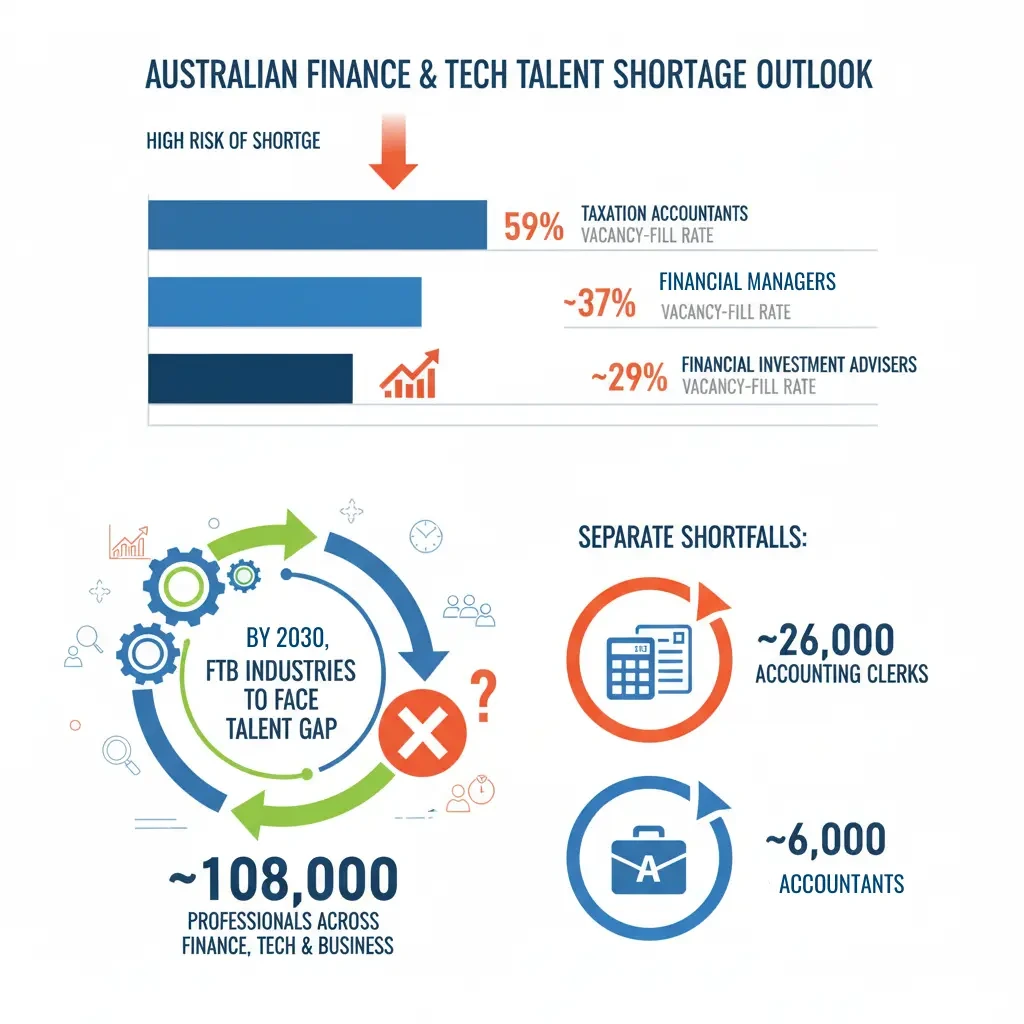
With this talent crunch, businesses can’t simply hire their way out of the problem. They’ll need to lean in on external specialist teams, globally available talent pools and flexible workforce models to keep the engine running.
Rising Costs and Competitive Pressures
Inflation is tightening its grip, wages are climbing and margins are under strain. The “do more with less” mantra is losing its edge. The new ask is: “Who’ll help you do better with what you already have?”
By offloading routine, repetitive tasks to external partners, your specialised in-house teams can focus on the strategic, high-impact decisions that actually move the needle. Outsourcing isn’t about just cost-saving anymore but also about unlocking capability, speed and agility whilst keeping an eye on the bottom line.
Technology’s Growing Role in the BPO Industry
The business process outsourcing sector is stepping into a new era powered by emerging technologies such as AI, RPA, cloud-based collaboration tools and predictive analytics.
These innovations are delivering faster turnaround times, higher accuracy and true scalability. If your outsourcing partner can’t talk about tech-led value, not just cost-led value, then you’re missing part of the story. We, at IOG, are already weaving in tech-driven solutions, adopting AI-enabled tools and automation frameworks to boost efficiency, reduce manual burden and ramp up value delivery.
Outsourcing Pillars for Success in 2026
- The Art of Human & Machine Collaboration
AI and automation efficiently handle mundane tasks, freeing humans to focus on what machines can’t: imagine, create and empathize. The true art lies in orchestrating this seamless collaboration, where technology processes data and suggests designs, while humans inject the judgment, vision and emotional intelligence needed to spark true insight. Ultimately, as trust is currency, transparency about AI’s role is vital. This blend of precision technology and irreplaceable human authenticity transforms efficiency into meaningful, impactful work.
- Specialised Remote Teams
In 2026, outsourcing shifts fundamentally from simply offloading tasks to embedding fully-fledged, specialized teams into your business DNA. These remote professionals are subject matter experts who live in your systems, speak your industry language and anticipate operational needs. By bringing in such strategic teams, which are deeply aligned with your core strategy, companies can finally unshackle internal staff from repetitive chores. This redirection of energy toward innovation, growth and big-picture thinking is what transforms outsourcing from a cost-saving tactic into a strategic powerhouse that turns distance into a competitive edge.
- Nearshoring & Borderless Workforces
Business boundaries are fading as companies rewire how and where teams are built. Nearshoring and borderless workforces are driving this transformation, offering a smarter way to scale. This model delivers proximity without compromise, giving enterprises access to top talent in nearby regions while maintaining seamless communication and cultural alignment. By combining the agility of nearshoring with borderless hiring, organisations can build dynamic dream teams that span continents, blending diverse perspectives into a single, cohesive ecosystem.
- Sustainability and Ethical Outsourcing
Profit alone is outdated; sustainability and ethics now define good business in outsourcing. This shift, driven by consumer and investor demand, moves companies toward ecosystems built on transparency and fair labor. Enterprises must source partners who champion ethical and green practices, while startups must embed these values from day one. This proves that purpose and profit coexist, creating trustworthy and supported brands.
- Outcome-Based Partnerships
The outsourcing playbook is being rewritten to focus on outcomes, not hours. This shift moves businesses from transactional contracts to transformative collaborations, reflecting an evolution from cost-cutting to value-creation and strategic alliance. For companies navigating disruption, these outcome-based models bring clarity and accountability, ensuring every dollar spent contributes directly to tangible business goals. For partners, this fosters true collaboration where both parties share risks, rewards and a unified vision of success.
- Data Security and Compliance
Trust is the new currency of outsourcing – and by 2026, it will decide who earns lasting partnerships and who gets left behind. As businesses share sensitive data across borders, compliance with universal and local standards such as ISO 27001, GDPR, the EU AI Act and Australia’s Privacy Act 1988 becomes essential. Embedding these within strong Information Governance Frameworks (IGF) demonstrates not just compliance but integrity and accountability. For businesses aiming to scale through outsourcing, this commitment to security builds credibility, safeguards continuity and cements the confidence that drives enduring success.
Client Wishlist for 2026
By 2026, outsourcing won’t be about ticking boxes or hunting the cheapest option. Businesses will be after partnerships that actually shift the dial – flexible, scalable and smart enough to adapt as priorities shift. Innovation will be expected and the partners who can offer fresh ideas, timely suggestions and real business insights will naturally stand out.
How IOG Can Help You Navigate the Next Wave of Outsourcing
By 2026, choosing the right outsourcing partner will matter more than ever. The best outcomes happen when outsourced talent, in-house staff and technology are fully integrated with shared goals, shared data and shared workflows.
At IOG Global, we see this evolution not as a challenge but as an opportunity to help businesses grow smarter. It’s about recognising where there’s a better system of doing things and then weaving that system into how your business operates. In short, it’s not “in-house vs outsourced”, it’s “we,” all operating as one high-performing engine. Our teams combine industry know-how with technology-enabled processes to anticipate needs, offer insights and help businesses make smarter moves. In a world that’s moving faster than ever, we’re the partner that helps you not just stay in the race but set the pace.
Recent Comments